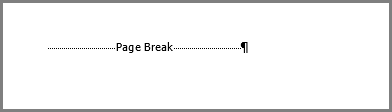
Tip
The content and steps in this article apply to Word for Microsoft 365 and other desktop versions of Word for Windows and Mac.
If the blank page is at the end of your document, it may be caused by Word's required end paragraph being pushed onto a new page. Because the end paragraph can't be deleted, use the steps below to make it fit on the preceding page and remove the blank page. The most reliable way is to make the end-paragraph very small (1 point):
Press Ctrl+Shift+8 (⌘+8 on a Mac) to show paragraph marks.
Select the paragraph mark.
Select inside the Font size box, type 01, and then press Enter.
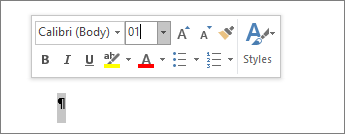
The paragraph now fits on the preceding page, removing the unwanted blank page.
Press Ctrl+Shift+8 again to hide the paragraph marks (⌘+8 on a Mac).
If that paragraph still doesn't fit on the preceding page, you can make the bottom margin smaller (Layout tab > Margins > Custom Margins, and set the bottom margin to something small, like 0.3 inches).
Tip
If the paragraph mark has a square bullet next to it, the paragraph might have the Page break before option turned on. To turn it off, right-click the empty paragraph, select Paragraph Settings (Home tab), and on the Lines and Page Breaks tab of the dialog box, uncheck Page break before.